
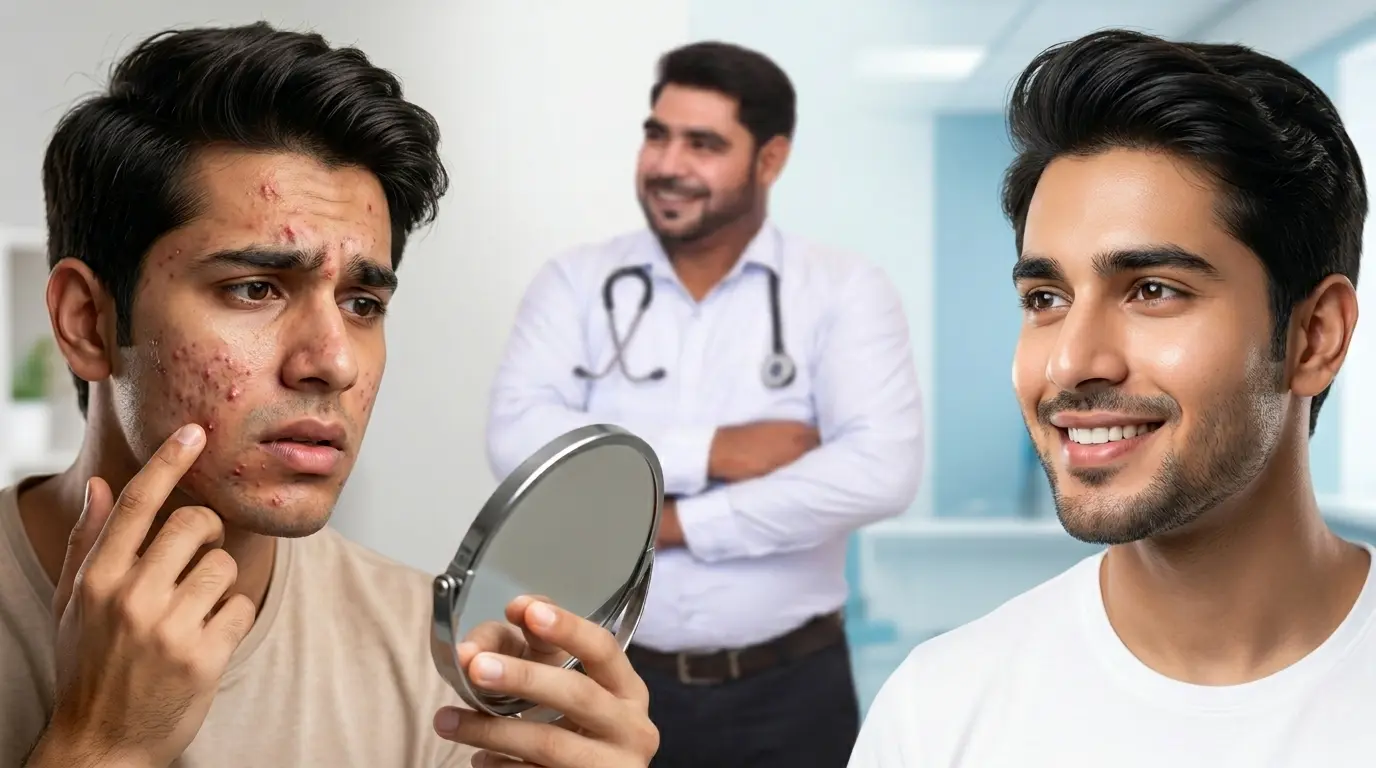
You wash your face twice a day. You have tried every face wash on the market. Some weeks your skin clears up, and just when you think it is over, the breakouts come right back. If this sounds familiar, you are not alone — and more importantly, there is a clear reason it keeps happening.
After treating thousands of acne patients at Skinner Clinic in Kishangarh, the most common frustration I hear is this: “Doctor, I have been treating my acne for months, but it just will not stop coming back.” The truth is, recurring acne is almost never a hygiene problem. It is a medical one — and it needs to be treated that way.
In this post, I will break down the actual root causes of recurring acne, which foods silently make it worse, and which treatments genuinely work long-term.
Why Does Acne Come Back Even After It Clears Up?
Most people treat the visible pimple — the symptom. The underlying cause, however, continues unchecked. Acne is a condition rooted in four biological processes happening inside the skin simultaneously:
- Excess sebum (oil) production
- Clogged pores due to dead skin buildup
- Bacterial overgrowth (Cutibacterium acnes)
- Inflammation triggered by hormonal changes or diet
A face wash or a basic cream may clear the bacteria temporarily, but if the hormonal trigger or skin cell turnover issue is not addressed, the cycle restarts within weeks. That is the loop most people are stuck in.
The 5 Root Causes of Recurring Acne (That Most People Overlook)
1. Hormonal Fluctuations
This is the number one driver of recurring acne in patients between the ages of 15 and 35. Androgens — male hormones present in both men and women — stimulate the sebaceous glands to produce more oil. When androgen levels spike (around menstruation, puberty, stress, or conditions like PCOS), breakouts follow almost predictably. If your acne flares on a cycle, hormones are likely involved. This needs a diagnosis, not just a cream.
2. Using the Wrong Skincare Products
Many patients come to us having spent months using moisturisers, sunscreens, and face washes that are not labelled non-comedogenic (non-pore-clogging). Oily or heavily fragranced products can actively clog pores and worsen acne even while you think you are treating it. Products with coconut oil, shea butter, or heavy silicones are common culprits for acne-prone skin.
3. Stopping Treatment Too Early
Acne treatments — especially topical retinoids and antibiotics — need consistent, long-term use. Most patients see improvement after 4 to 6 weeks and immediately stop. The skin needs a minimum of 3 to 6 months of consistent treatment for the underlying oil production and bacterial balance to stabilise. Stopping early almost guarantees a rebound.
4. Chronic Stress
When the body is under stress, it releases cortisol. Cortisol signals the skin to produce more oil, which directly feeds acne-causing bacteria. Students during exams, working professionals during high-pressure periods, and anyone going through emotional stress will often notice their skin deteriorating. If your acne follows your stress levels, this connection is not coincidental.
5. Undiagnosed Underlying Conditions
PCOS (Polycystic Ovary Syndrome), thyroid imbalances, and insulin resistance can all manifest as persistent acne on the lower face and jawline. In women especially, acne that does not respond to standard treatment often has a hormonal or endocrine cause that requires blood work and a proper diagnosis before the right treatment plan can be made.
How Diet Affects Acne: What to Eat and What to Avoid
Diet is not the sole cause of acne, but for many patients, it is a significant trigger that goes completely unaddressed. Here is what the clinical evidence and years of patient outcomes — shows:
Foods That Commonly Worsen Acne
- High-glycaemic foods: White bread, rice, sugar, and processed snacks cause blood sugar spikes that increase insulin levels, which in turn boosts androgen activity and oil production.
- Dairy products: Particularly skimmed milk has been associated with increased acne severity in several studies. The hormones naturally present in milk can stimulate sebaceous glands.
- Fried and greasy food: These do not directly cause acne (touching greasy food does not clog your pores), but the inflammatory load on the body from a consistently poor diet can worsen breakouts.
Foods That Support Clearer Skin
- Zinc-rich foods (pumpkin seeds, lentils, chickpeas) — zinc reduces inflammation and regulates oil gland activity.
- Omega-3 fatty acids (walnuts, flaxseeds, fish) — reduce the skin’s inflammatory response.
- Antioxidant-rich vegetables and fruits — support skin cell turnover and reduce oxidative damage.
- Water — adequate hydration helps flush toxins and keeps skin barrier function intact.
Acne Treatment Options Available in Kishangarh
At Skinner Clinic, we do not prescribe a one-size-fits-all protocol. The right treatment depends on the type of acne (comedonal, inflammatory, cystic, hormonal), how long it has been present, and the patient’s overall health. Here is a breakdown of what we commonly use and why:
Topical & Oral Prescription Treatments
Retinoids (Vitamin A derivatives) normalise skin cell turnover and prevent pore blockages. Topical antibiotics reduce bacterial load. In moderate to severe cases, oral antibiotics or isotretinoin may be prescribed under close supervision. These are medical treatments that require a dermatologist’s guidance, self-medicating with these can cause serious side effects.
Chemical Peels
Salicylic acid and glycolic acid peels exfoliate the skin at a deeper level than any face wash can. They decongest pores, reduce active breakouts, and over a course of sessions, significantly improve post-acne dark spots (PIH). Chemical peels are one of the most effective adjunct treatments for acne-prone skin.
Laser Therapy for Acne
Our FDA-approved laser treatments target the sebaceous glands directly, reducing oil production at the source. Laser is particularly effective for patients with stubborn cystic acne or those who have not responded well to topical treatments. It also addresses acne scars in the same process.
Hormonal Treatment (for eligible patients)
For female patients where hormonal acne is confirmed, anti-androgen medications or oral contraceptives may be considered after a full hormonal assessment. This approach addresses acne at the root rather than managing symptoms repeatedly.
When Should You See a Skin Doctor in Kishangarh?
Stop relying on trial and error if any of the following apply to you:
- Your acne has been present for more than 3 months without improvement
- You are developing painful, deep cystic pimples under the skin
- Acne is leaving behind dark marks or scars that are not fading
- Breakouts appear to follow a hormonal pattern (before periods, under stress)
- Your acne is affecting your confidence or daily life
Early, proper treatment prevents permanent scarring. The longer aggressive acne goes untreated, the harder those scars are to reverse.
Final Thought: Acne Is Treatable, But Only If the Cause Is Addressed
Recurring acne is not a life sentence. But it does need a proper diagnosis, a consistent treatment plan, and a few honest changes to diet and skincare habits. Switching face washes every month is not a strategy — it is guesswork.
At Skinner Skin & Hair Clinic in Kishangarh, we have helped over 2 lakh patients achieve clear skin through targeted, personalised treatment plans. Whether your acne is mild, moderate, or severe — the right approach can get it under control.
Book a consultation with Dr. Mohd. Shaloo at Skinner Clinic
About the Author
Dr. Mohd. Shaloo is a qualified dermatologist and the founder of Skinner Skin & Hair Clinic in Kishangarh, Rajasthan. With over a decade of clinical experience and 2 lakh+ patients treated, he specialises in acne, hormonal skin conditions, laser therapy, and hair restoration. He is committed to evidence-based dermatology and patient-first care.
Frequently Asked Questions
Q: Why does my acne keep coming back after treatment?
A: Recurring acne usually means the root cause — hormonal imbalance, pore-clogging products, or incomplete treatment — has not been addressed. Treating the visible pimple without a proper diagnosis leads to repeated breakouts.
Q: Can diet alone cause recurring acne?
A: Diet is a trigger, not always the sole cause. High-sugar and high-dairy diets are clinically linked to worsening acne, but most persistent cases involve a combination of hormonal, genetic, and lifestyle factors.
Q: How long does acne treatment take to show results?
A: Most topical treatments take 6 to 8 weeks to show visible improvement. A complete course of treatment is typically 3 to 6 months. Stopping early is one of the most common reasons acne comes back.
Q: Is there a skin doctor in Kishangarh who specialises in acne treatment?
A: Yes. Dr. Mohd. Shaloo at Skinner Skin & Hair Clinic in Kishangarh specialises in acne, hormonal skin conditions, and post-acne scarring. The clinic is located at Agarsen Circle, Ajmer Road, Kishangarh.