
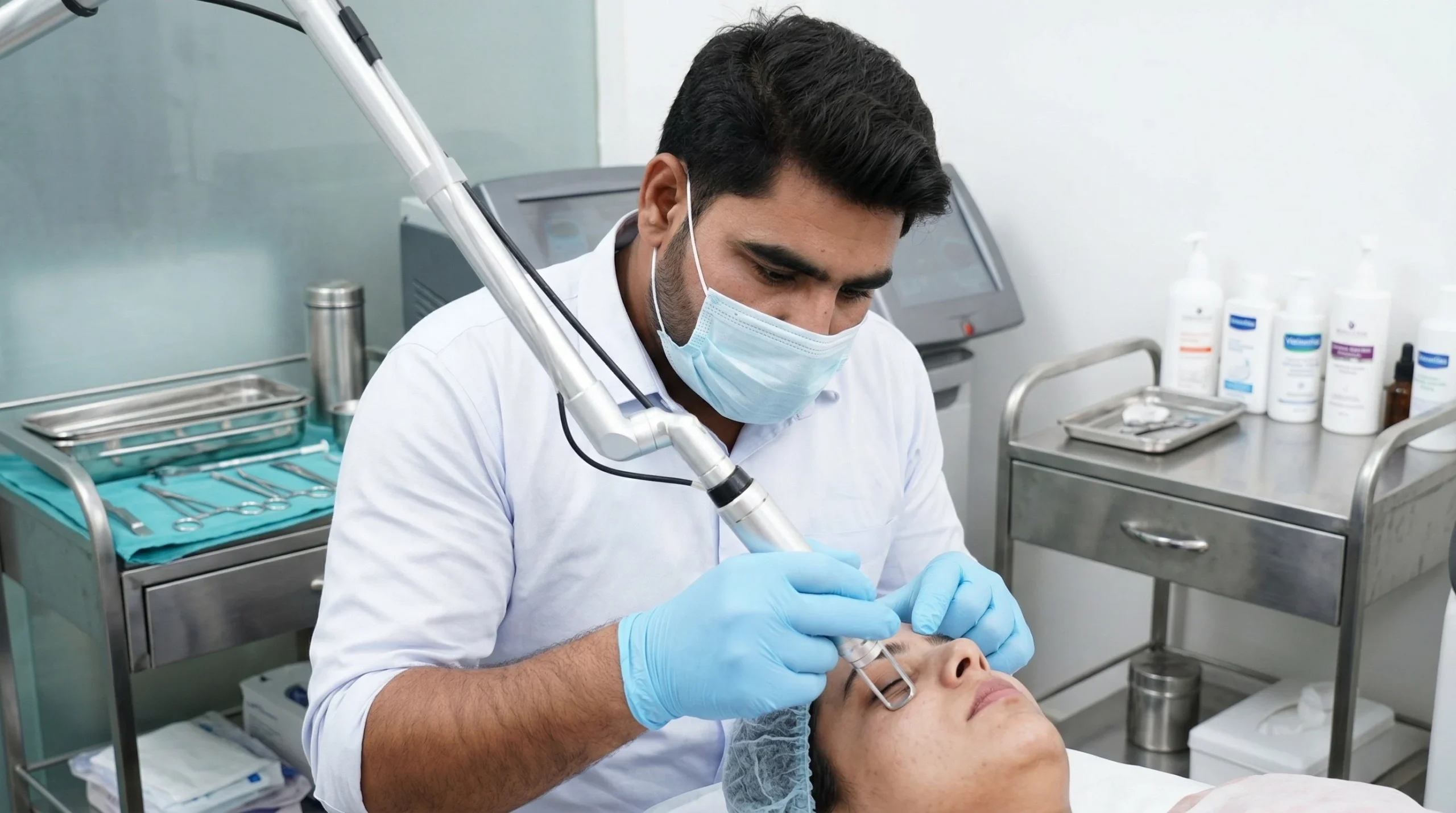
Finding the right skin specialist in Rajasthan’s semi-arid belt isn’t as straightforward as it should be. Between the dust, the punishing summers, and water quality that doesn’t always do your complexion any favours, residents of Kishangarh and nearby Ajmer deal with a distinct set of dermatological challenges that general physicians — however well-intentioned — simply aren’t trained to address. Skinner Clinic is based in Kishangarh and regularly sees patients travelling from Ajmer for specialist dermatological care.
The UV index across this stretch of Rajasthan stays dangerously elevated for six to eight months a year. Without consistent sun protection and appropriate management, conditions like melasma, solar lentigines, and uneven hyperpigmentation become almost inevitable — particularly in women during or after pregnancy.
Acne and post-acne scarring rank among the top concerns for patients in their teens through their thirties. The combination of heat, chronic sweat, dust-clogged pores, and an oily skin predisposition creates near-perfect conditions for breakouts. Left untreated or managed incorrectly, acne progresses to dark post-inflammatory marks and deep textural scars that require professional intervention to correct.
Hair loss has become almost epidemic in this region. Hard water — high in calcium, magnesium, and total dissolved solids — weakens the hair shaft, causes scalp mineral build-up, and disrupts the follicular environment. Compounding this are nutritional deficiencies (iron and Vitamin D are chronically low in this population), chronic stress, and hormonal imbalances that often go unaddressed for years before hair fall becomes severe enough for patients to seek help.
What a Qualified Dermatologist Actually Does
A board-certified dermatologist holds an MBBS plus a postgraduate qualification — either an MD in Dermatology or a DVD — and is trained to diagnose and treat conditions affecting the skin, hair, nails, and mucous membranes. Dermatologists are also trained to identify early clinical signs of skin cancers, autoimmune conditions like psoriasis and vitiligo, fungal and bacterial infections, and hormonal disorders that manifest on the skin.
A thorough consultation at Skinner Clinic involves the following:
- Medical history & lifestyle assessment — diet, stress levels, medications, family history, water source, and occupational exposures.
- Clinical skin examination — often using a dermatoscope for magnified analysis of lesions, the scalp, and nail changes.
- Accurate diagnosis — differentiating between conditions that look similar but require entirely different treatment approaches.
- Personalised treatment plan — built around your skin type, condition severity, budget, lifestyle, and realistic outcome expectations.
- Follow-up and monitoring — ensuring treatment is working and adjusted where needed over time.
Skin Treatments Available at Skinner Clinic
Modern dermatology extends well beyond prescriptions. Skinner Clinic offers a comprehensive range of medical and aesthetic skin treatments addressing both therapeutic and cosmetic concerns — many of which are particularly relevant to the challenges common in this region.
| Treatment | What It Does |
|---|---|
| Chemical Peels | Glycolic, salicylic & lactic acid peels for pigmentation, acne, dull skin & uneven texture. Stimulates cell turnover and collagen synthesis. |
| Laser Treatments | Q-switched Nd:YAG, fractional CO2 & laser toning for pigmentation, acne scars & skin resurfacing. The gold standard for conditions topicals cannot resolve. |
| Microneedling + PRP | Collagen induction therapy combined with platelet-rich plasma. Highly effective for scars, large pores & skin laxity. |
| Acne Management | Comprehensive protocols combining topical retinoids, systemic therapy, comedone extraction & LED light therapy. |
| Vitiligo Treatment | Narrowband UVB phototherapy, topical immunomodulators & surgical repigmentation options for meaningful repigmentation. |
| Pigmentation & Melasma | Targeted combination therapy for melasma, sun damage & post-inflammatory hyperpigmentation common in Indian skin. |
Chemical Peels — The Local Workhorse Treatment
Using acids at clinically controlled concentrations, chemical peels exfoliate damaged upper layers of skin and stimulate cell turnover and collagen synthesis. They are particularly effective for post-acne marks and sun-damaged skin — the two most prevalent concerns among patients in this region. Selecting the wrong peel or concentration can cause post-inflammatory hyperpigmentation on darker Indian skin tones, which is precisely why professional administration matters.
Laser Treatments — When Topicals Aren’t Enough
Lasers work by targeting specific chromophores in the skin — melanin for pigmentation, haemoglobin for redness, or water molecules for resurfacing. Laser toning with Q-switched Nd:YAG is particularly effective for the melasma and diffuse pigmentation common in Rajasthan’s sun-exposed population, while fractional CO2 addresses the deeper textural scars that chemical peels cannot reach.
Hair & Scalp Treatments
Hair fall consultations have increased dramatically in Kishangarh and across the wider region, with many patients travelling from Ajmer for specialist diagnosis and treatment. The triggers in this region are multiple and often concurrent, making accurate diagnosis — rather than generic treatment — the critical starting point.
Trichoscopy — Diagnosis Before Treatment
Trichoscopy is a dermatoscopic examination of the scalp and hair follicles that allows a dermatologist to accurately determine the type of hair loss. Androgenetic alopecia, telogen effluvium, alopecia areata, and scalp infections like tinea capitis look different under trichoscopy and require entirely different treatment approaches. Skipping this diagnostic step leads to months of ineffective treatment and unnecessary expense.
PRP Hair Treatment
Platelet-Rich Plasma therapy is one of the most effective minimally invasive options for hair regrowth available. The patient’s own blood is drawn, spun in a centrifuge to concentrate growth factors (PDGF, TGF-beta, VEGF), and injected into the scalp at the follicular level. Most patients require 3–6 sessions spaced 4–6 weeks apart, with visible improvement in hair density typically noted after the second or third session.
Low-Level Laser Therapy (LLLT) for Hair
LLLT uses specific wavelengths of low-intensity light to stimulate weakened hair follicles — a non-invasive, painless option that works well alongside PRP and prescription treatments like topical minoxidil or oral finasteride. Particularly suited to patients in early-stage hair thinning or those seeking a needle-free approach.
Hard Water Scalp Treatments
Chronic exposure to hard water causes mineral build-up on the scalp, disrupts the skin barrier, and contributes to seborrheic dermatitis and folliculitis — all worsened by Rajasthan’s heat and sweat. Scalp treatments addressing these conditions are a frequently overlooked but important part of comprehensive hair care in this region.
What Makes a Good Dermatology Clinic?
Not all skin clinics are equal. In a market growing rapidly alongside beauty parlours offering cosmetic injectables and laser treatments without medical supervision, knowing what to look for matters.
- Verified medical credentials — Is the dermatologist MBBS-qualified with an MD Dermatology or DVD? Ask directly. Credentials matter.
- Clinically validated equipment — Does the clinic use FDA-approved or CE-certified devices? Absence of this is a meaningful red flag.
- Diagnostic-first approach — A trustworthy dermatologist explains why a treatment is recommended before prescribing it, and sets realistic expectations.
- Transparent pricing — Reputable clinics provide clear, upfront cost information. Pressure to book additional treatments on the spot is a warning sign.
- Sterilisation & infection control — Single-use needles, proper sharps disposal, and sterile procedure environments are non-negotiable.
- Follow-up protocol — A clinic that doesn’t schedule or encourage follow-up visits isn’t invested in your long-term outcome.
Frequently Asked Questions
How much does laser treatment cost for patients coming from Ajmer?
Laser treatment costs vary depending on the type of laser, the condition being treated, and the area of the body. Laser toning sessions for pigmentation typically start from ₹2,000–₹5,000 per session, while fractional CO2 for deep acne scars may be priced higher. A consultation at Skinner Clinic will provide an accurate, personalised quote.
How many PRP sessions are needed for hair regrowth?
Most patients require 3–6 PRP sessions spaced 4–6 weeks apart. Visible improvement in density is typically noted after the second or third session. Maintenance sessions every 6–12 months are recommended after the initial course.
Is PRP hair treatment painful?
PRP involves micro-injections into the scalp, which involves mild discomfort. Most clinics apply a topical numbing cream 30–45 minutes beforehand, making the procedure well-tolerated by the vast majority of patients. Soreness at injection sites typically resolves within 24 hours.
What is the difference between a dermatologist and a cosmetologist?
A dermatologist is a qualified medical doctor — MBBS plus MD/DVD in dermatology — trained to diagnose and treat over 3,000 conditions affecting skin, hair, nails, and mucous membranes. A cosmetologist is a beauty professional not licensed to prescribe medication or diagnose medical conditions.
How many sessions does acne scar treatment require?
Acne scar treatment typically requires 4–8 sessions depending on scar type and depth. Fractional CO2 laser or microneedling with PRP sessions are spaced 4–6 weeks apart. Optimal results are usually visible 3–6 months after the final session as collagen continues to remodel.
Does hard water cause hair loss in Kishangarh and the Ajmer region?
Hard water is a recognised contributing factor to hair damage in Rajasthan. It can weaken the hair shaft and cause scalp mineral deposits. A trichoscopy examination will distinguish hard-water-related damage from androgenetic alopecia or telogen effluvium, guiding the correct treatment.
Is vitiligo treatable at Skinner Clinic?
Meaningful repigmentation is achievable in many patients through narrowband UVB phototherapy, topical immunomodulators (tacrolimus/pimecrolimus), and in selected cases, surgical repigmentation techniques. Early and consistent treatment yields the best outcomes. Skinner Clinic offers a structured approach tailored to each patient’s condition.
Ajmer Patients: Visit Our Kishangarh Clinic
Whether your concern is acne, pigmentation, hair fall, or laser treatment — your consultation starts with an honest, thorough assessment. No pressure. Evidence-based care from specialists who understand your skin.
Book a Consultation: skinnerclinic.com/book-appointment
Located in Kishangarh | Serving patients from Ajmer | WhatsApp enquiries welcome | Walk-ins subject to availability